
You check your dispensary’s Yelp page, and a handful of 5-star reviews have vanished. What gives? It might not be a bug. It’s likely Yelp’s increasingly aggressive review spam filters at work.
Yelp has always tried to filter out fake or unhelpful reviews, but recent updates mean more legitimate reviews are getting caught in the net. For a cannabis dispensary, where online reputation is everything, losing genuine customer feedback can sting. This isn’t just about vanity metrics; it directly impacts foot traffic and sales.
Understanding Yelp’s Aggressive New Review Filters
Yelp’s mission is to provide trustworthy reviews. Its automated filter, which the company says is always running, evaluates every single review based on quality, reliability, and user activity. The goal is to weed out Yelp spam reviews, biased feedback (like reviews from employees or competitors), and solicited reviews.
However, the algorithm isn’t perfect. It often flags reviews that it deems “less reliable,” moving them to a separate “not currently recommended” section at the bottom of your profile. Most customers never see these.
“Losing a handful of 5-star reviews isn’t just about vanity metrics; it directly impacts foot traffic and sales.”
Common triggers for the filter include:
- New User Accounts: Reviews from users with no profile picture, no friends, and only one review are highly suspect to the algorithm.
- Suspicious Language: Over-the-top praise or overly generic comments can sometimes get flagged.
- Solicitation Patterns: A sudden influx of reviews from a single location (e.g., all from your in-store iPad) looks unnatural and can trigger the filter.
- Lack of Detail: Short, unhelpful reviews like “Great spot!” are often seen as low-quality.
Why Dispensaries Are Uniquely Vulnerable
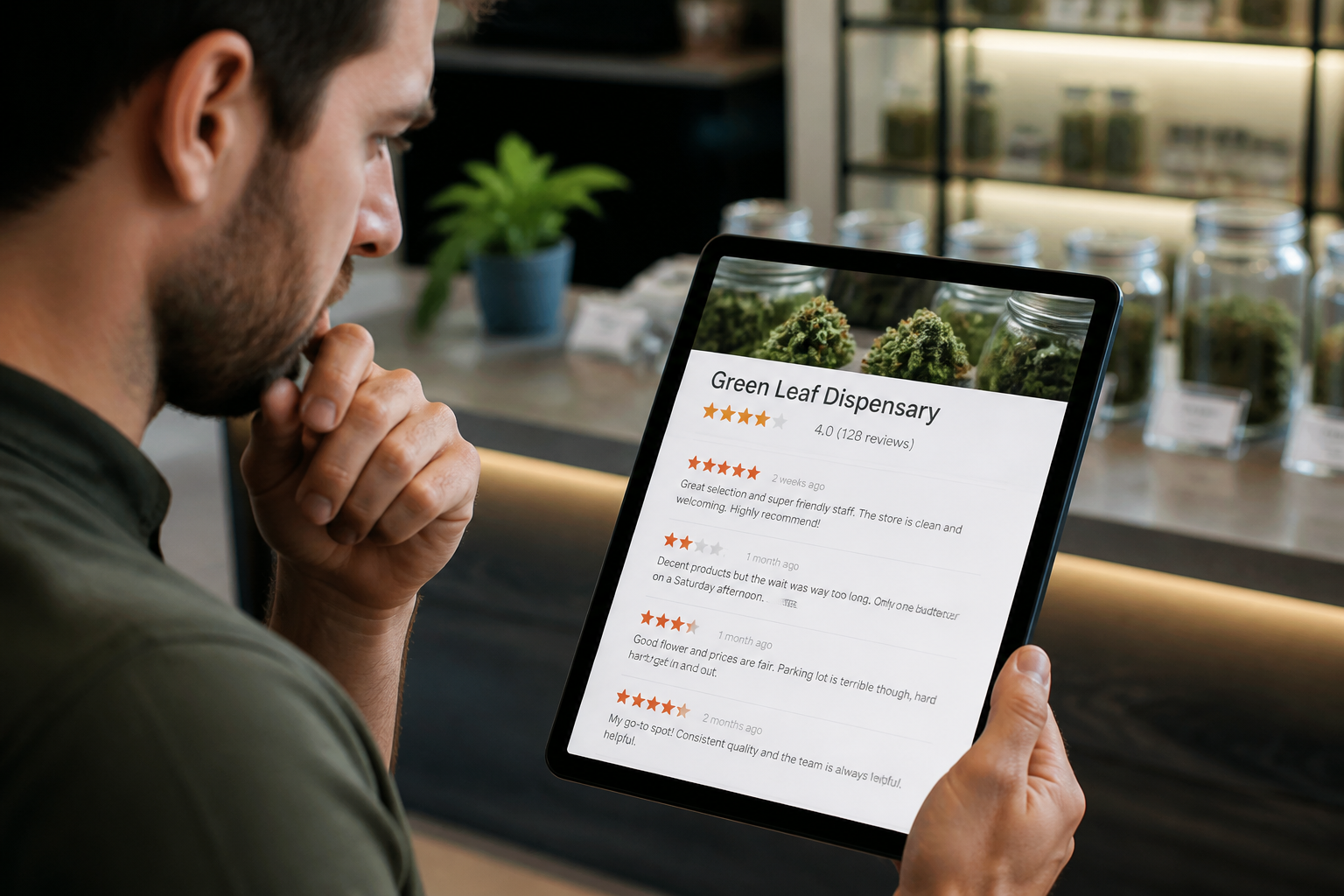
The cannabis industry faces unique challenges with online reputation. The customer base is diverse, and the experience is highly personal, leading to passionate reviews on both ends of the spectrum. When Yelp’s filters are added to the mix, it creates a perfect storm for dispensary reputation management headaches.
Here’s a breakdown of how review platforms treat cannabis businesses:
| Platform | Review Philosophy | Key Challenge for Dispensaries |
|---|---|---|
| Yelp | Heavily filtered for “reliability.” Actively discourages solicitation. | High chance of losing legitimate reviews to the aggressive filter. |
| Google Maps | Less aggressive filtering. Reviews appear almost instantly. | Easier for competitors or disgruntled individuals to post fake negative reviews. |
| Weedmaps/Leafly | Industry-specific. Reviews are generally trusted by the audience. | Audience is limited to existing cannabis consumers; less reach to new customers. |
While you can’t control the Yelp review filters, you can adapt your cannabis review strategy to minimize their impact and protect your hard-earned reputation.
How to Adapt Your Dispensary’s Review Strategy
Since directly asking for reviews is out, the focus must shift to creating a review-worthy experience and organically encouraging engagement on your Yelp profile. It’s a subtle but crucial difference.
- Focus on World-Class Service: This is the foundation. A truly exceptional in-store experience is the most powerful driver of positive reviews. When a customer feels valued and helped, they are intrinsically motivated to share their story.
- Promote Your Yelp Profile (Indirectly): Instead of “Review Us,” use Yelp’s official branding and calls-to-action like “Find us on Yelp” or “Check-in on Yelp.” Place official Yelp stickers in your window. This encourages users to interact with your page in ways that build their own profile’s credibility, making their future reviews more likely to stick.
- Leverage Yelp Check-Ins: Encourage customers to “check-in” when they visit. A check-in is a signal of a real visit, which lends credibility to that user’s account in the eyes of Yelp’s algorithm.
- Respond to ALL Reviews: Thank positive reviewers and professionally address negative ones. This shows you’re an engaged business owner. It also encourages more customers to leave feedback, knowing they’ll be heard.
Proactive Steps to Monitor Your Online Reputation
Don’t wait for your star rating to drop. Active monitoring is key to effective dispensary reputation management.
- Check Your “Not Recommended” Reviews Weekly: Make it a habit to scroll to the bottom of your Yelp page and read the reviews that have been filtered. This gives you a more complete picture of customer sentiment. Sometimes, a well-written, legitimate review gets caught, and you can learn valuable feedback from it.
- Track Your Rating Over Time: Use a simple spreadsheet to log your Yelp, Google, and Weedmaps ratings on a weekly or bi-weekly basis. This helps you spot trends quickly. Did your rating drop after a specific event or promotion? This data provides context.
- Set Up Google Alerts: Create alerts for your dispensary’s name to monitor mentions across the web. This helps you catch conversations happening outside of the major review platforms.
Ultimately, Yelp’s filters are a reality you can’t change. But by focusing on an excellent customer experience and adopting a smart, indirect cannabis review strategy, you can build a resilient online reputation that shines through the noise.
Frequently Asked Questions
Can I ask Yelp to move a review from “not recommended” to the main page?
No. Yelp is firm that its filter is automated and they do not manually move reviews. Trying to fight the filter for a specific review is generally not a productive use of time.
What if a competitor is leaving fake negative reviews?
If you genuinely believe a review violates Yelp’s Content Guidelines (e.g., it’s from a competitor, contains hate speech, or isn’t about a real experience), you can report it. Click the flag icon next to the review and provide a clear, concise explanation for why you’re reporting it.
Is it okay to offer a discount for a review?
Absolutely not. This is called “review gating” or offering incentives, and it’s a major violation of Yelp’s policies. If you’re caught, Yelp may place a prominent consumer alert on your business page, severely damaging your reputation.