
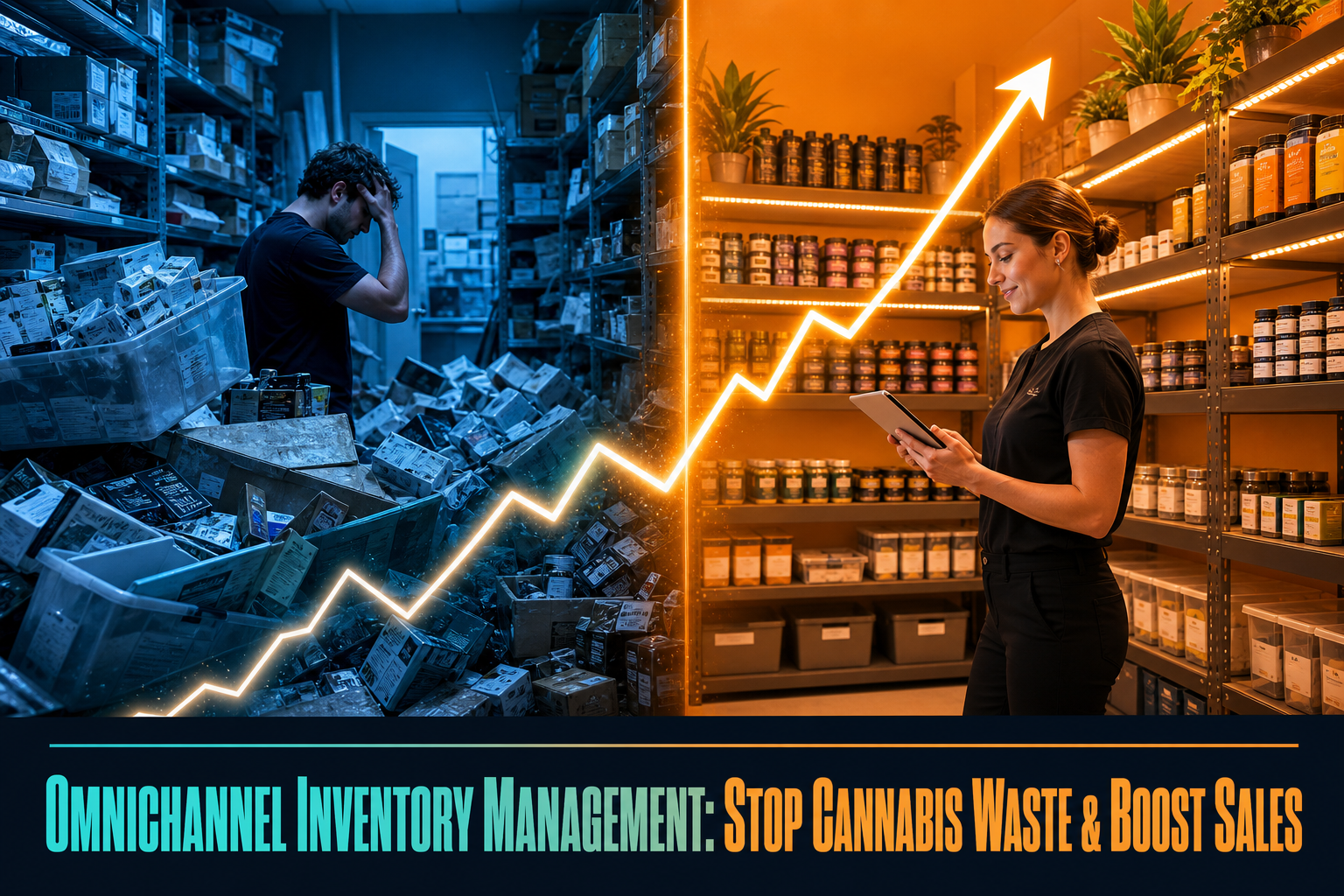
That sinking feeling when a customer orders your top-shelf flower online, only to find you’re fresh out when they arrive? Or worse, finding a whole case of edibles that passed their expiration date, lost in the back of the stockroom? Ouch.
Inventory mishaps aren’t just annoying—they’re silent killers of profit and customer loyalty. In a market this competitive, you can’t afford to have your online menu out of sync with your in-store stock. This is where a modern approach to inventory management isn’t just a nice-to-have; it’s essential for survival and growth. Adopting an omnichannel inventory strategy is the key to stopping the waste, maximizing every sale, and creating a seamless shopping experience that keeps customers coming back.
What Is Omnichannel Inventory Management?
Let’s clear this up right away. Omnichannel isn’t just another word for selling through multiple channels—that’s multichannel. Multichannel is having a brick-and-mortar store, a website, and maybe a delivery service. The problem is, in a typical multichannel setup, these systems often operate in silos. Your website inventory doesn’t talk to your in-store POS in real time.
Omnichannel inventory smashes those silos. It creates a single, centralized brain for your entire stock. Whether a budtender sells a gram of Blue Dream at the counter, or a customer reserves the last vape cart on your Leafly menu, the system updates everywhere, instantly. It’s one source of truth for your entire operation.
The High Cost of Disconnected Inventory Systems
Running your dispensary on spreadsheets and a basic POS that doesn’t sync with your online menus is like trying to navigate a maze blindfolded. The costs add up quickly, even if they aren’t always obvious on a balance sheet.
You’re dealing with:
- Lost Sales from Stockouts: A customer sees a product online, comes to your store, and it’s gone. They aren’t just disappointed; they’re likely going to your competitor down the street.
- Increased Cannabis Waste: This is a huge one. When you don’t have a clear, real-time view of your stock, products with approaching expiration dates get buried. That’s perfectly good product—and profit—that you have to literally throw away.
- Manual Reconciliation Nightmares: How much time do you or your managers spend manually counting inventory and trying to match it to sales data from three different sources? That’s time that could be spent on marketing, training, or customer service.
- Compliance Risks: State regulators don’t look kindly on inventory discrepancies. A system that isn’t airtight from seed-to-sale tracking is a major compliance liability waiting to happen.
Why You Must Track Inventory Velocity
Here’s a term you need to get friendly with: inventory velocity. It’s the measure of how quickly you sell a specific product over a period of time. It’s the single most important metric for making smart purchasing decisions.
A simple POS might tell you *what* you sold. A powerful inventory management system tells you *how fast* it’s selling. This allows you to:
- Double Down on Winners: Identify your fastest-moving products and ensure they are always in stock to maximize your sales boost.
- Discount or Bundle Slow-Movers: See which products are collecting dust? Before they expire, you can create targeted promotions, budtender incentives, or bundles to move them, turning potential cannabis waste into revenue.
- Optimize Purchasing: Stop guessing what to reorder. Use hard data to predict future sales and stock levels, ensuring you have just the right amount of product at all times.
“Stop guessing what to reorder. Use hard data to predict future sales and stock levels, ensuring you have just the right amount of product at all times.”

Unifying Your Sales Channels: A Practical Guide
So, how do you get from a siloed setup to a seamless omnichannel experience? There are a few levels of sophistication, from basic to best-in-class. Here’s how they stack up.
| Approach | How It Works | Pros | Cons |
|---|---|---|---|
| Manual / Spreadsheets | Staff manually updates a spreadsheet and then updates online menus. | Cheap to start. | Extremely prone to errors, massive time sink, no real-time data, high risk of stockouts/overselling. |
| Basic POS + Menu Embed | POS pushes inventory to an iFrame menu on your site. Limited or no third-party integrations. | Better than manual. Some automation. | Syncs can be slow. Often doesn’t integrate with marketplaces like Leafly. Still not a single source of truth. |
| True Omnichannel Platform | Platform acts as the central hub. POS, website, and marketplaces all pull from and write to the same real-time database. | Complete accuracy, huge time savings, enables inventory velocity tracking, reduces cannabis waste. | Requires investment in the right technology partner. |
Key Features of a Modern Omnichannel Platform
When you’re ready to make the leap, don’t just pick any platform that calls itself “omnichannel.” Look for specific features that solve the core problems of cannabis retail.
Your checklist should include:
- Real-Time, Two-Way Syncing: The system must update inventory counts across all channels instantly. When a product is sold in-store, it should immediately become unavailable online.
- Direct API Integrations: The platform needs to play nice with the tools you already use. Look for deep integrations with your POS, as well as marketplaces like Weedmaps, Leafly, and IHeartJane.
- Advanced Reporting & Analytics: It should be easy to run reports on inventory velocity, sales trends by channel, and profit margins per product. This is where you get the data for a real sales boost.
- Built-in Compliance: The system should integrate seamlessly with your state’s track-and-trace system (like Metrc), automatically reporting sales and adjustments to keep you compliant.
The Payoff: A Real-World Sales Boost
Investing in a true omnichannel inventory management system isn’t an expense; it’s an investment with a clear ROI. The benefits go far beyond simply cleaning up your stockroom.
You’ll empower your team to sell with confidence, knowing the menu is always accurate. You’ll build trust with customers, who will learn that they can rely on your online listings. Most importantly, you’ll transform your inventory from a liability into a data-generating asset. By understanding what sells, when it sells, and where it sells, you can make smarter decisions that directly lead to less waste, higher inventory turnover, and a healthier bottom line.
Ultimately, omnichannel inventory management allows you to run your dispensary like a modern, data-driven retail business—because that’s exactly what it is.
Frequently Asked Questions
What’s the real difference between multichannel and omnichannel inventory?
Multichannel means you sell in multiple places (store, website). Omnichannel means all those places are connected to a single, real-time inventory system. A sale in one channel is instantly reflected in all others.
How does this help with state compliance?
A true omnichannel platform integrates with state track-and-trace systems like Metrc. It automatically reports sales and adjustments, drastically reducing the risk of human error and ensuring your records always match the state’s.
Can I integrate my existing Weedmaps and Leafly menus?
Yes, that’s one of the key benefits. A good platform will have direct API integrations with major cannabis marketplaces. This allows for the two-way, real-time syncing that prevents overselling and keeps your menus accurate.
How long does it take to implement an omnichannel system?
Implementation time varies depending on the platform and the complexity of your operation, but a good technology partner can often get you up and running in a matter of weeks. The process typically involves migrating data, setting up integrations, and training your staff.