

Is your online menu a little different from your in-store inventory? Does your loyalty program only work at the register? If you nodded yes, you’re leaving a shocking amount of money on the table. Customers today expect a seamless experience, whether they’re browsing on their phone or talking to a budtender. When your channels don’t talk to each other, you’re not just creating friction—you’re actively losing sales.
The fix? A true omnichannel cannabis strategy. It’s about more than just having a website and a storefront; it’s about weaving them together into a single, cohesive system that makes buying from you effortless and enjoyable. Getting this right is the single biggest lever you can pull for cannabis retail growth in the coming years. Let’s break down what that actually means and how you can implement it.
What Is Omnichannel Cannabis, Really?
Let’s get one thing straight: if you have a Leafly menu and a physical store, you’re running a multichannel retail operation. If those two systems don’t automatically share inventory and customer data, you aren’t running an omnichannel one. Multichannel means you have multiple channels available to customers. Omnichannel means those channels work together as one cohesive unit.
The core difference is the flow of data. In a true omnichannel setup, your POS, e-commerce menu, in-store kiosks, and mobile app all read from and write to the same central database. This creates a “single source of truth” for your inventory, pricing, promotions, and customer profiles. For the customer, it feels like one continuous conversation with your brand, no matter how they choose to shop.
| Approach | How It Works | Customer Experience |
|---|---|---|
| Multichannel | Dispensary has a store and a website. Channels are managed separately and don’t share data automatically. Inventory is siloed. | Fragmented. “I saw it online, but they don’t have it in the store.” |
| Omnichannel | Store, website, app, and delivery all sync to a central hub for inventory, customers, and orders. It’s one unified system. | Seamless. “I can start my order on the app and finish it with a budtender in the store.” |
4 Foundational Omnichannel Strategies
Before you can get fancy, you need to build the foundation. These four strategies are the pillars of any successful omnichannel cannabis operation. Don’t skip these.
1. Unify Your Inventory Management
This is it—the absolute, unequivocal starting point. If your inventory isn’t unified, nothing else matters. A unified inventory system means you have one pool of stock that’s visible and updated in real-time across your POS, website, Weedmaps/Leafly menus, and any other sales channel. When a budtender sells an eighth in-store, it should instantly disappear from your online menu. No more manual updates, no more disappointed customers, and no more compliance headaches from overselling.
2. Master Click-and-Collect (BOPIS)
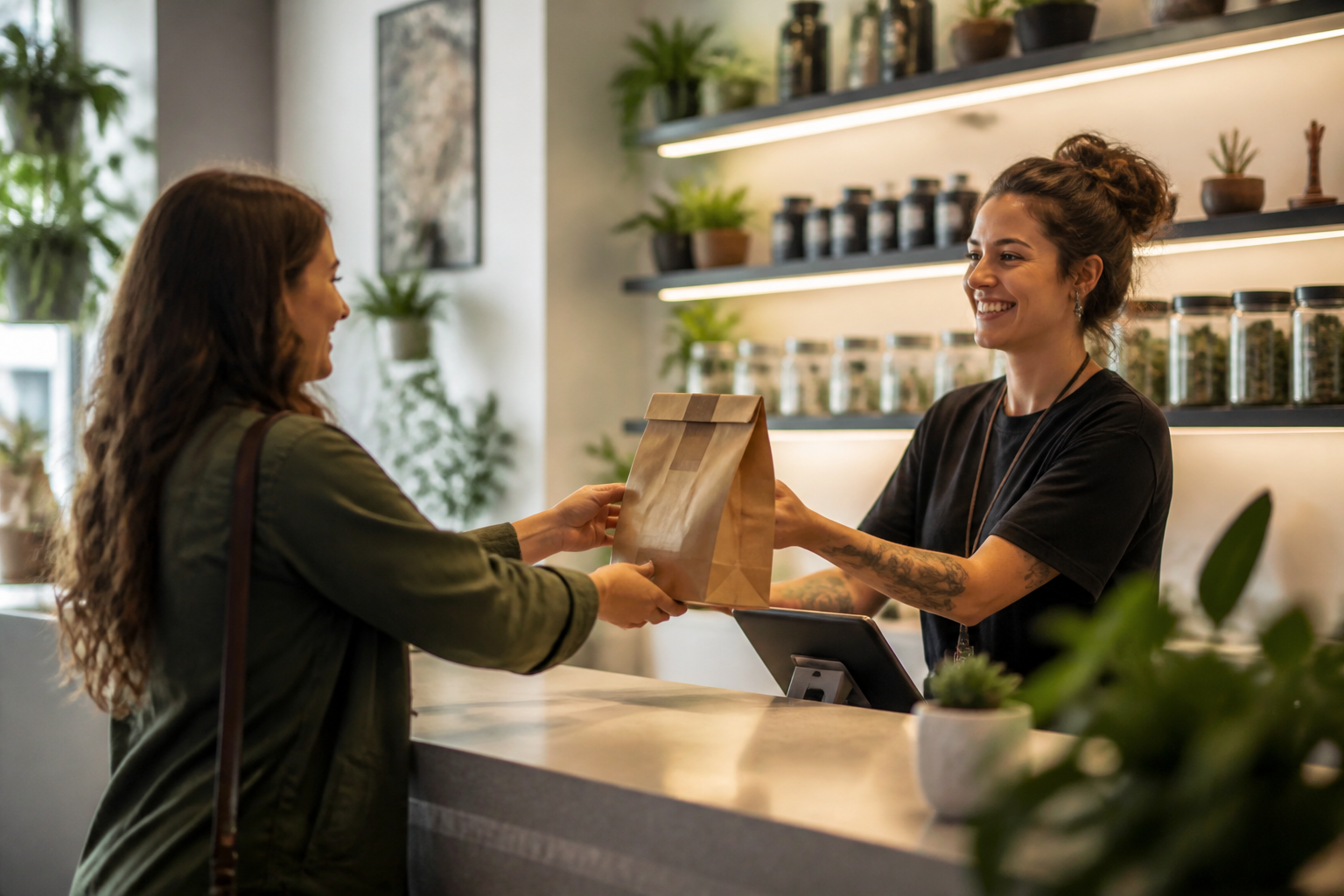
Buy Online, Pick Up In-Store (BOPIS) is a quintessential omnichannel feature. It perfectly bridges the gap between online convenience and in-store experience. Customers can browse your full, up-to-the-minute menu at their leisure, place an order, and then quickly and easily pick it up. This respects their time, reduces queues in your dispensary, and often leads to impulse buys at the checkout counter.
3. Create a Cross-Channel Loyalty Program
Does your loyalty program work everywhere? Can a customer earn points from an online order and redeem them in-store? Can they check their points balance on your app? If not, it’s a broken experience. Your loyalty program should be tied to the customer, not the channel. This encourages repeat business and gives you a 360-degree view of your customer’s purchasing habits, which is pure gold for your marketing efforts.
4. Sync Your Customer Profiles
When a customer creates an account on your website, that profile should be instantly accessible to your budtenders at the POS. This allows your team to see their purchase history, preferences, and loyalty status. This simple sync transforms the transaction from a simple sale into a personalized consultation. Imagine a budtender saying, “I see you enjoyed the Blue Dream pre-rolls you bought online last month; we just got a new batch in you might like.” That’s how you build loyalty.
6 Advanced Revenue-Boosting Tactics
Once your foundation is solid, you can start implementing more advanced tactics to accelerate your cannabis retail growth. These strategies leverage your unified data to create hyper-efficient marketing and a stickier customer experience.
5. Personalized Marketing Automation
With a unified customer profile, you can automate your marketing with surgical precision. Trigger emails or SMS messages based on behavior across any channel. Examples include cart abandonment reminders for online shoppers, “we miss you” campaigns for customers who haven’t purchased in 60 days (online or in-store), or product recommendations based on past purchases.
“The goal is to create a single, seamless customer journey that increases lifetime value, not just one-off sales.”
6. Interactive In-Store Kiosks
Self-service kiosks are a powerful addition to the dispensary floor. They should be more than just a digital menu. A true omnichannel kiosk allows customers to log in to their account, view their loyalty points, browse personalized recommendations, and even place an order for immediate pickup at the counter. This empowers customers who know what they want and frees up budtenders to spend more time on consultations.
7. Consistent Branding & Promotions
Your “Weekly Special” should be the same whether a customer sees it on Instagram, gets an email about it, sees it on your website, or walks into your store. Inconsistent promotions are confusing and erode trust. An omnichannel approach ensures that all marketing and promotional messaging is centrally managed and pushed out to all channels simultaneously.
8. Digital Ads Targeted by Purchase History
This is where it gets really powerful. By connecting your POS/CRM data to your advertising platforms (where compliance allows), you can run incredibly efficient campaigns. For example, you can create a custom audience of everyone who has purchased edibles in the last 90 days and show them an ad for your new line of gummies. This is a level of targeting your competitors can only dream of.
9. Seamless Delivery & Curbside Integration
Delivery and curbside pickup aren’t separate businesses; they are extensions of your retail operation. The ordering process, inventory availability, and customer communication should be fully integrated into your main system. A customer should be able to track their delivery driver on your website, not a third-party app, keeping them within your brand ecosystem.
10. Effortless, Cross-Channel Returns
While returns are tricky in cannabis, the principle applies to customer service issues. If a customer has an issue with a product they bought online, they should be able to resolve it in-store without a hassle. Your budtender should be able to pull up their online order instantly and make it right. This turns a potential negative experience into a loyalty-building moment.
How to Measure Your Omnichannel Success
So how do you know if all this work is paying off? You need to track the right metrics. Shift your focus from channel-specific stats (like “in-store sales”) to customer-centric ones:
- Customer Lifetime Value (CLV): Are customers who shop across multiple channels spending more with you over time? (Hint: The answer is almost always yes).
- Purchase Frequency: Are omnichannel customers buying more often than single-channel customers?
- Channel Adoption: What percentage of your in-store customers have also created an online account? Track the growth of this cohort.
- BOPIS/Delivery Utilization: Are these fulfillment options growing in popularity? This is a direct measure of your omnichannel convenience.
By focusing on these metrics, you’ll get a clear picture of how your omnichannel cannabis strategy is impacting customer behavior and, ultimately, your bottom line.
Frequently Asked Questions
What’s the first step to becoming an omnichannel dispensary?
Start with a tech audit. Your absolute first step is to ensure your POS and e-commerce platforms can integrate to create a unified inventory system. If they can’t talk to each other, you need to switch to providers that can.
Is omnichannel cannabis marketing expensive to set up?
There are upfront costs related to your tech stack, but the long-term ROI is significant. By reducing manual data entry, preventing lost sales from stockouts, and increasing customer lifetime value, an omnichannel system pays for itself. Start small with foundational strategies and scale up.
Can a small, single-store dispensary still use an omnichannel strategy?
Absolutely! Omnichannel is a strategy, not a store count. A single dispensary can (and should) have a perfectly synced website, in-store POS, and loyalty program. It provides a competitive advantage over other local shops that have a clunky customer experience.