
Stop shouting into the void with generic, city-wide ads. It’s time to get personal, get local, and get real results. If you’re running the same creative for every store in your portfolio, you’re leaving money on the table.
The secret sauce for savvy dispensary operators in 2026 and beyond isn’t just about having great products; it’s about getting the right message in front of the right people, in the right place. That’s where radius targeting comes in. It’s a simple but powerful shift in your local cannabis marketing strategy that can dramatically boost foot traffic and sales by treating each of your dispensary locations like the unique neighborhood hubs they are.
What Is Radius Targeting (And Why Does It Matter)?
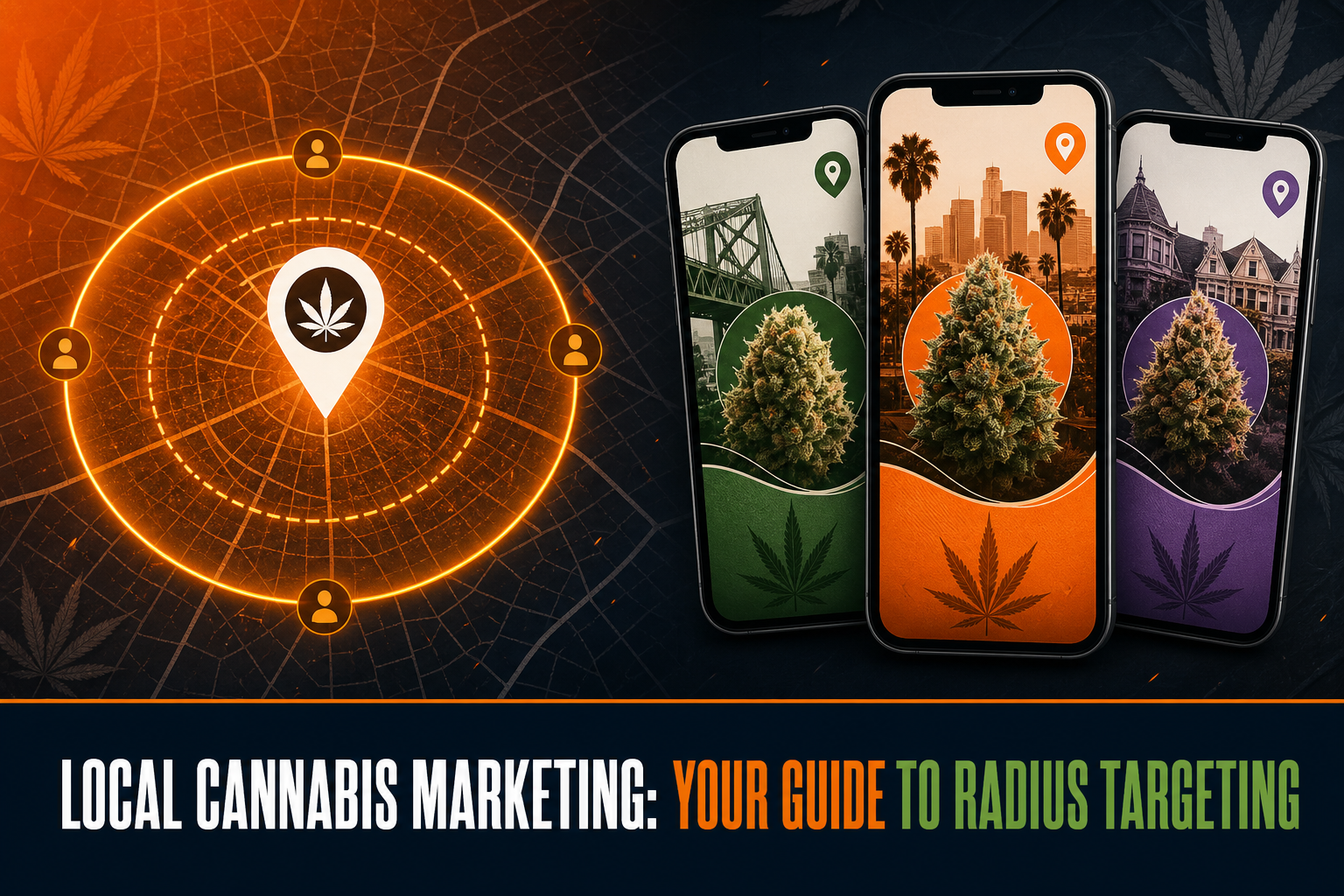
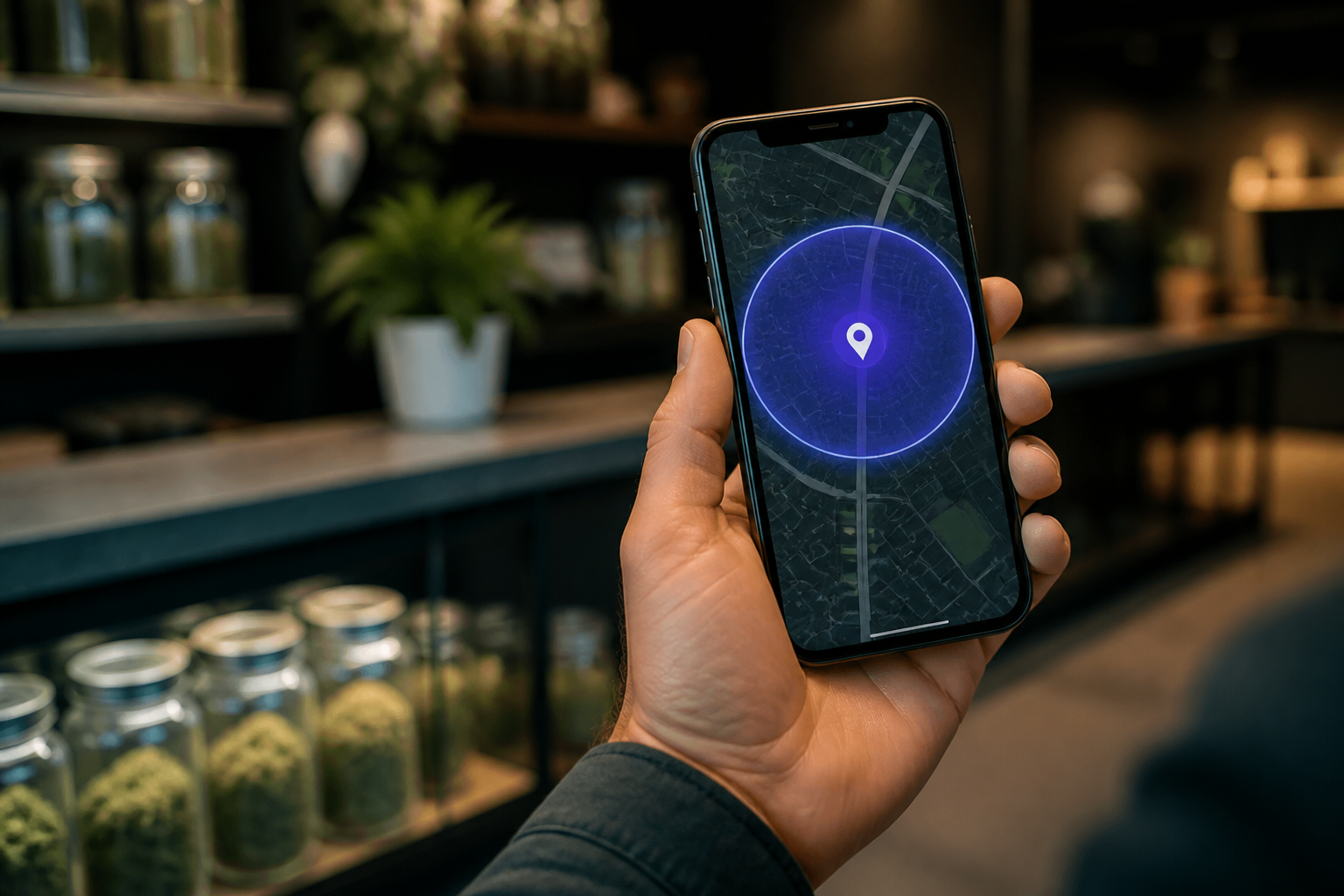
Let’s cut through the jargon. Radius targeting is exactly what it sounds like: you define a geographic circle (a radius) around a specific point—in this case, your dispensary—and your digital advertising platform (like Google, Meta, or a cannabis ad network) will only show your ads to people inside that circle.
Instead of running an ad campaign that targets an entire city or county, you can set up a campaign that targets a 2-mile radius around your downtown store and a separate 5-mile radius around your suburban location. This simple adjustment is the foundation of a sophisticated local cannabis marketing plan because it acknowledges a fundamental truth: proximity is everything in retail.
The Problem with One-Size-Fits-All Cannabis Ads
If you operate multiple dispensaries, you know each one has its own personality. The customers who frequent your store near a college campus have different buying habits than the ones who visit your location in a quiet residential area. So why would you show them the same exact ad?
A generic, one-size-fits-all approach leads to wasted ad spend and lower engagement. An ad promoting high-end concentrates might fall flat in a neighborhood that overwhelmingly prefers pre-rolls and edibles. By failing to tailor your message, you’re not just being inefficient; you’re missing a chance to connect with your community on a deeper level.
Geo-Fencing vs. Radius Targeting: What’s the Difference?
You’ve probably heard the term “geo-fencing” thrown around, too. While related, it’s not the same as radius targeting, and it’s important to know when to use each. Radius targeting is the broad, foundational tool, while geo-fencing is more of a precision instrument.
| Feature | Radius Targeting | Geo-Fencing |
|---|---|---|
| Shape | Simple circle around a point | Custom polygon shape (e.g., a park, a block, a building) |
| Best For | Targeting the area directly around YOUR store | Targeting competitor locations, event venues, or specific landmarks |
| Complexity | Easy; native feature in most ad platforms | More complex; often requires specialized third-party software |
| Primary Goal | Drive immediate foot traffic from nearby customers | Influence behavior, gather competitive intel, or capture event audiences |
How to Build a Killer Local Cannabis Marketing Strategy
Ready to put this into action? It’s a straightforward process that combines data analysis with creative thinking. Here’s a step-by-step approach.
1. Define Your Radii with Data
Don’t just guess how far your customers travel. Dive into your POS or CRM data. Look at the zip codes of your loyalty members. Most systems can give you a clear picture of your primary, secondary, and tertiary trade areas. You might find that 70% of your customers live within 3 miles. That’s your golden radius.
2. Develop Store-Specific Creative
This is the most important step. Once you’ve defined your target area for each store, you need to create ads that speak directly to the people in it. The goal is to make a customer think, “Oh, that’s my shop.”
Ideas for store-specific creative:
- Mention the Neighborhood: Use ad copy like, “Hey Northwood! Your favorite 1:1 gummies are back in stock.”
- Reference Local Landmarks: “Located just two blocks from City Park. Stop by after your walk!”
- Promote Hyper-Local Deals: Create an offer that’s only valid at that specific location and mention it in the ad.
- Feature Store-Specific Best-Sellers: Check the sales data for that store. If they sell more wellness products than any other location, feature tinctures and topicals in their ads.
“The goal of store-specific creative is to make a customer think, ‘Oh, that’s MY shop.'”
3. Layer on Audience Targeting
Radius targeting sets the “where,” but you still need to define the “who.” Layer demographic filters (age, gender) and interest targeting (e.g., people interested in wellness, music festivals, or hiking) on top of your geographic targeting. This narrows your audience to people who are both nearby *and* likely to be interested in your products.
Connecting Radius Targeting to Local SEO
Your paid advertising and your organic search presence shouldn’t live in separate silos. A smart radius targeting strategy directly supports your local SEO efforts. When people in a specific area see your ads, they might not click, but they might open Google Maps and search for you later.
Make sure your digital storefront is as welcoming as your physical one. This means meticulously optimizing the Google Business Profile (GBP) for *each* of your locations. This includes:
- Location-Specific Photos: Use high-quality photos of the store’s interior, exterior, and staff.
- Localized GBP Posts: Announce store-specific deals or events using GBP Posts.
- Answer Questions: Proactively answer common questions in the GBP Q&A section for each store.
- Consistent NAP: Ensure your Name, Address, and Phone number (NAP) are perfectly consistent across your website, GBP, and other local directories.
Measuring the ROI of Your Local Ad Campaigns
How do you know if it’s working? Look beyond simple metrics like clicks and impressions. The true measure of success for local cannabis marketing is foot traffic and in-store sales.
Track metrics like:
- In-Store Visits: Some platforms, like Google, offer store visit conversions, which track users who saw an ad and later visited your location.
- Coupon Redemptions: Use unique discount codes for each ad campaign (e.g., “WEB10” for the downtown store’s campaign) to track sales directly.
- Branded Search Lift: Monitor Google Search Console to see if searches for your brand name increase in the targeted areas after a campaign launches.
Frequently Asked Questions
How big should my dispensary’s advertising radius be?
Start by analyzing your customer data. A good starting point for most urban or suburban dispensaries is a primary radius of 1-3 miles and a secondary radius of 3-5 miles. If you’re in a rural area, you might need to go wider, up to 10 or 20 miles.
Can I use radius targeting on platforms like Weedmaps or Leafly?
Yes, to an extent. While they may not use the term “radius targeting,” their advertising options are inherently local. You bid for placement within a specific geographic market. The principles of store-specific creative still apply—make sure your profile and deals are tailored to that location’s customer base.
Is it better to use geo-fencing to target competitors?
This is an advanced tactic known as “conquesting.” It can be effective but also expensive and requires specialized tools. For most dispensaries, the highest ROI comes from mastering radius targeting around your own stores first. Nail your own backyard before you try to capture someone else’s.
Is radius targeting compliant with cannabis advertising regulations?
Generally, yes. Radius targeting is a powerful tool for compliance. Most states require cannabis ads to be shown only to audiences where a high percentage of users are over 21. By tightly controlling the geographic area, you have a better chance of reaching a compliant audience. However, you must always ensure your ad platform’s policies and local state regulations are followed.
Moving from a broad, generic approach to a focused, local cannabis marketing strategy is the single biggest lever you can pull to grow your business. It’s about being smarter with your budget, more relevant with your messaging, and ultimately, a more valuable part of the communities you serve.