
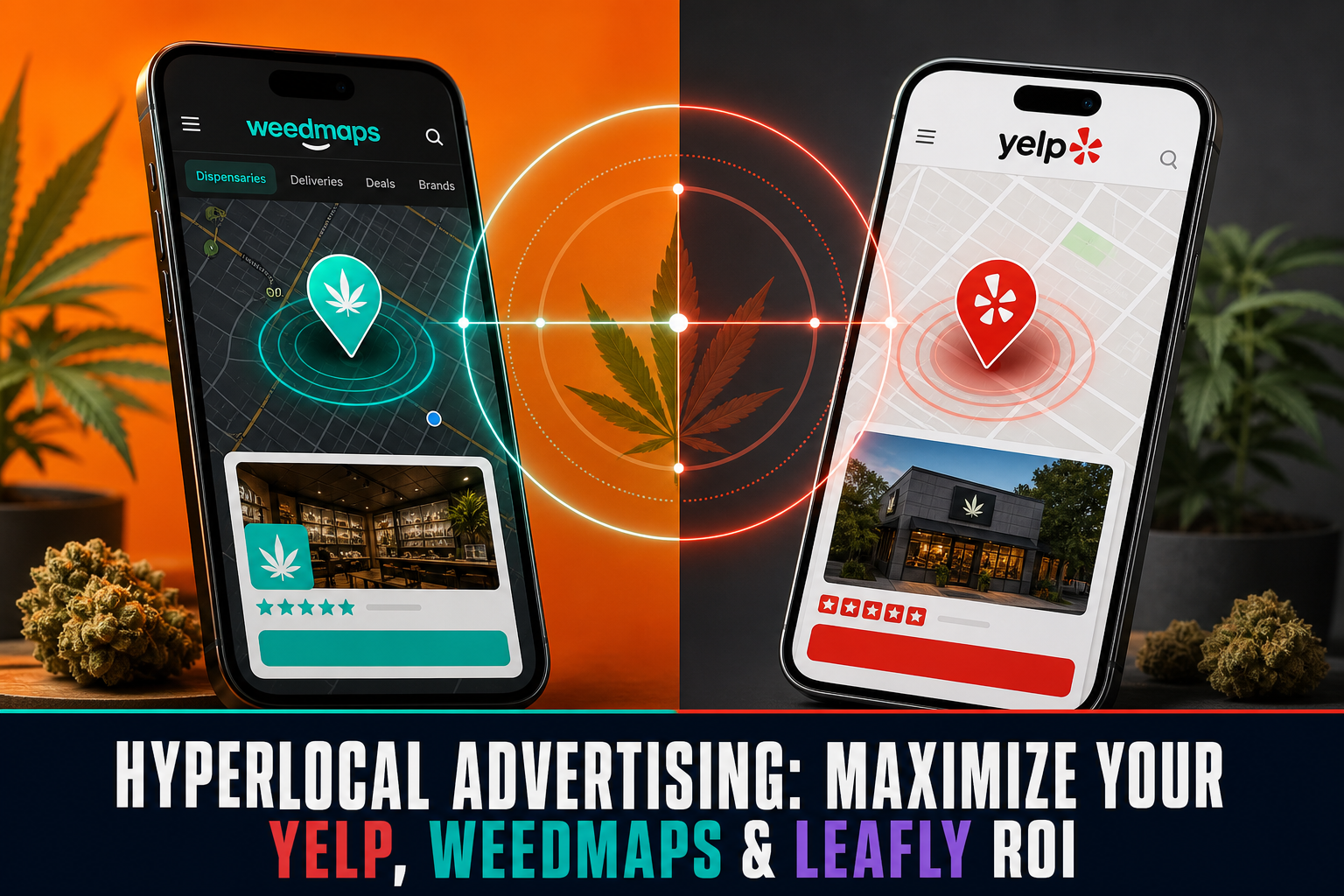
Is your ad budget feeling more like a black hole than a growth engine? You’re not alone. Many dispensaries pour money into Weedmaps, Leafly, and Yelp, only to see disappointing results. The problem often isn’t the platform—it’s the strategy. It’s time to stop shouting into the void and start talking to the customers who are actually listening: the ones right around the corner.
Using a hyperlocal advertising strategy is like having a superpower. Instead of blanketing an entire city with your ads, you focus your budget on the specific neighborhoods and zip codes where your ideal customers live, work, and shop. This is about precision, efficiency, and—most importantly—better ROI. By mastering geotargeting on the platforms your customers already use, you can turn your ad spend into a predictable source of foot traffic and revenue.
What Exactly Is Hyperlocal Advertising?
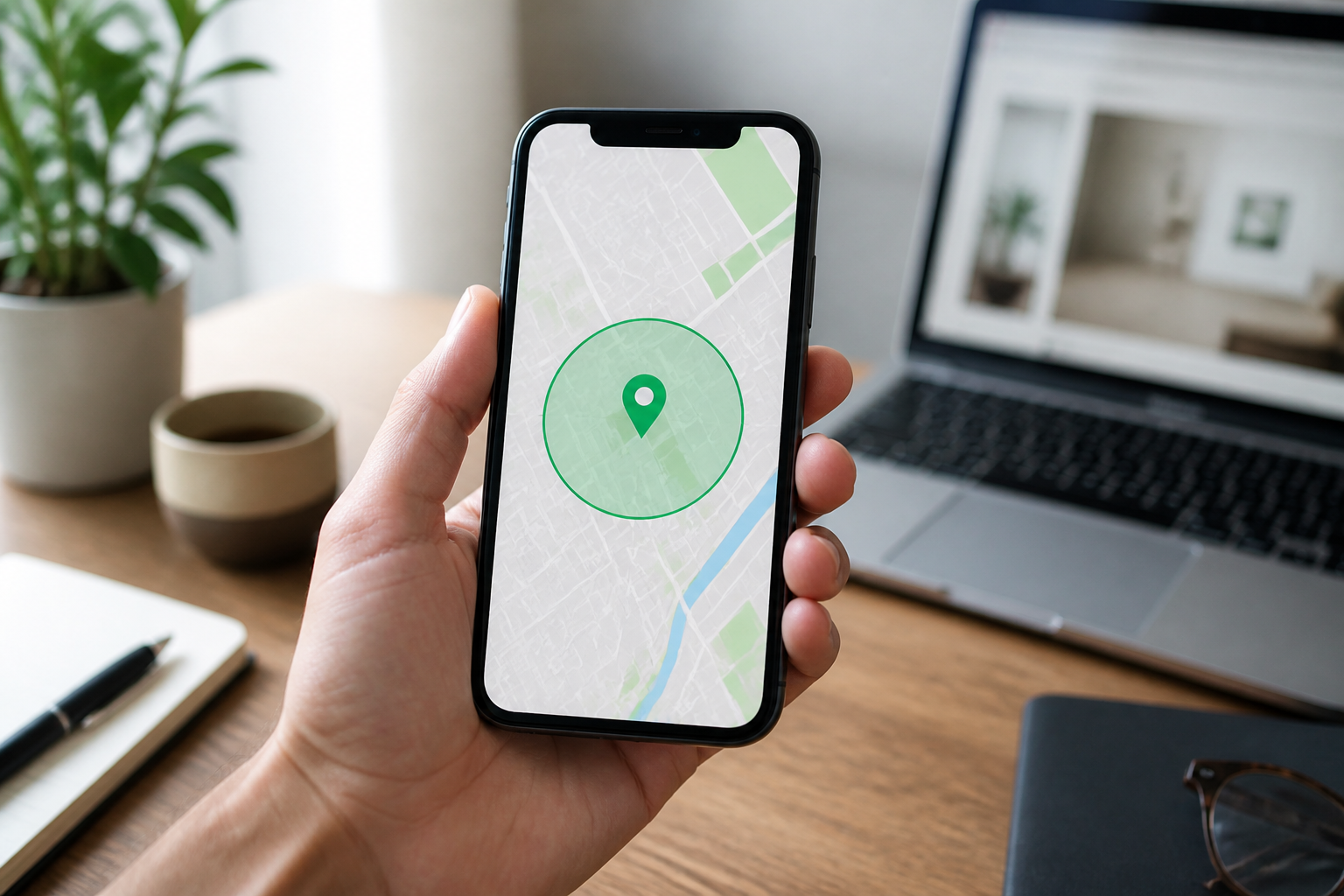
Let’s get specific. “Local” advertising might target a whole city or metro area. Hyperlocal advertising zooms in much, much closer. We’re talking about targeting customers within a 1- to 5-mile radius of your dispensary, or even zeroing in on specific zip codes, neighborhoods, or commercial districts.
Think of it as the digital version of putting a flyer on every door in your immediate neighborhood. Instead of paper, you’re using sophisticated geotargeting on cannabis-friendly platforms to serve digital ads to people who are physically near your store. This proximity makes them far more likely to convert from online viewers to in-store buyers.
Why Hyperlocal Matters for Dispensaries
Competition is fierce. A new dispensary seems to pop up on every corner, and cannabis consumers have more choices than ever. Convenience is a massive factor in their decision-making process. Most people aren’t going to drive 30 minutes across town for a pre-roll they can get just five minutes away.
Hyperlocal advertising for cannabis dispensaries directly addresses this reality. By focusing on proximity, you get several key advantages:
- Reduced Ad Waste: You stop paying to show ads to people who are too far away to ever visit. Every dollar is spent on potential customers within a realistic travel distance.
- Increased Ad Relevance: Ads that speak to a user’s immediate location feel more personal and timely. Mentioning a neighborhood or a nearby landmark can grab attention fast.
- Higher Conversion Rates: When a customer sees your ad and knows you’re just down the street, the barrier to visiting is incredibly low. This translates to more foot traffic and a better dispensary ROI.
- Competitive Advantage: While your competitors are still using broad, city-wide targeting, you can dominate your immediate service area, becoming the go-to, convenient choice for local residents.
“Stop paying to show ads to people who are too far away to ever visit. Hyperlocal is about spending smarter, not spending more.”
Geotargeting Strategies for Key Platforms
Weedmaps, Leafly, and Yelp are the big three for dispensary visibility, and each offers unique tools for hyperlocal advertising. Your Yelp ad strategy won’t be identical to your Leafly advertising plan. Let’s break down how to approach each one.
| Platform | Geotargeting Strength | Best For… |
|---|---|---|
| Weedmaps | Radius targeting, featured listings | Driving immediate traffic from active, high-intent shoppers on the map. |
| Leafly | Sponsored listings by location, deal promotion | Capturing deal-hunters and strain-specific searchers in your area. |
| Yelp | Advanced radius targeting, zip code targeting | Reaching a broader local audience that may not be on cannabis-specific apps yet. |
For Weedmaps ads, focus on owning your map presence. Paid placements (like featured listings) are often shown based on the user’s location. By bidding here, you ensure that when someone opens the app near your store, you’re the first pin they see. It’s the digital equivalent of having the best sign on the busiest street.
With Leafly advertising, leverage their Deals platform. You can run promotions that are highlighted to users searching within your vicinity. A deal like “20% off for residents of the 90210 zip code” is a classic hyperlocal tactic that creates a powerful incentive for nearby shoppers.
Your Yelp ad strategy can be the most powerful for geotargeting cannabis customers. Yelp allows you to set a precise mileage radius around your business for your ads to appear in. You can—and should—get granular. Don’t just set it to 10 miles and hope for the best. Start smaller (3-5 miles) and analyze the results before expanding.
Building Your Hyperlocal Ad Strategy
A successful strategy isn’t just about flipping a switch on your ad dashboard. It requires a bit of homework.
1. Define Your Zones: Where do you want to target? Don’t guess. Use your sales data. Look at the zip codes of your best customers. Are there nearby office parks for a lunchtime rush campaign? A college campus? A new apartment complex? Create 2-3 distinct zones to start.
2. Craft Location-Specific Offers: Make your ads resonate with the people in those zones. Instead of a generic “10% off,” try “Show your Downtown office ID for 15% off from 11am-2pm.” This makes the offer feel exclusive and urgent.
3. Tailor Your Ad Copy: Speak your customers’ language. Mention local landmarks or neighborhood names in your ad copy on Yelp or in your Leafly profile. For example: “Your Arts District cannabis destination” is much more effective than “A great cannabis dispensary.”
Measuring Your Geotargeting ROI
How do you know if your hyperlocal advertising is actually working? You need to track the right metrics. Forget fuzzy goals like “brand awareness.” We want to see a direct impact on your bottom line.
Key metrics to watch:
- Cost Per Acquisition (CPA): How much does it cost you in ad spend to get one new customer through the door? Track this for each campaign zone.
- Coupon/Offer Redemption: If you’re running a location-specific offer, how many people are actually using it? This is a direct measure of ad effectiveness.
- In-Store Traffic Lift: Compare foot traffic on days you’re running a heavy hyperlocal campaign versus days you are not. Many platforms, including Yelp, offer analytics on this.
- Average Order Value (AOV) from Geo-Coupons: Are the customers brought in by these ads big spenders? Track their AOV to see if you’re attracting the right kind of clientele.
By focusing on these concrete numbers, you can continuously refine your geotargeting cannabis strategy. If one zip code is performing poorly, pause it and reallocate that budget to a more profitable zone. This data-driven approach is the key to maximizing dispensary ROI and leaving your competition behind.
Frequently Asked Questions
What’s the ideal radius for hyperlocal targeting?
It depends on your location. For a dense urban area, start with 1-3 miles. In a more suburban or rural setting, you might start with 5-7 miles. The key is to test and see where the point of diminishing returns is.
Can I do geotargeting on a small budget?
Absolutely! In fact, hyperlocal advertising is perfect for small budgets because it concentrates your spending where it will have the most impact. It’s more efficient than trying to spread a small budget across a wide, untargeted area.
How is this different from geofencing?
Geotargeting delivers ads to users *within* a defined area (like a zip code). Geofencing is more about triggering an ad when a user *enters or exits* a specific, often very small, virtual boundary (like a single building or event). Most dispensary ad platforms like Yelp and Weedmaps focus on geotargeting.