
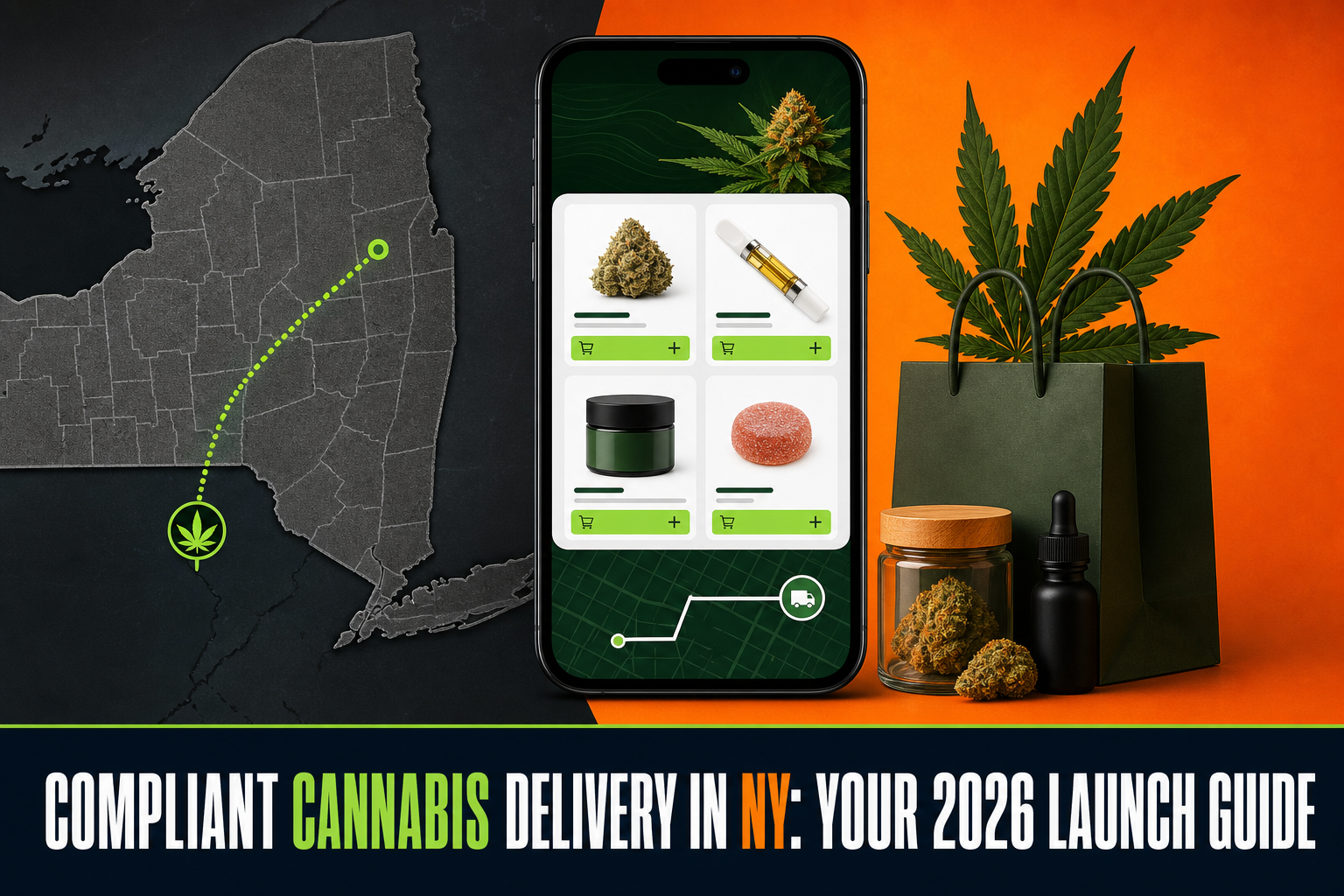
The dream of ‘weed on wheels’ in the Empire State is quickly becoming a reality. But turning that dream into a profitable, compliant cannabis delivery NY operation? That’s a whole different game. The opportunity is massive, but so are the regulatory hurdles.
Fear not. While the Office of Cannabis Management (OCM) has laid out a complex set of rules, building a successful delivery service is entirely achievable with the right plan. This guide is your roadmap to navigating the legal landscape, choosing the right tools, and launching a delivery service that your customers will love.
Understanding New York’s Cannabis Delivery Landscape
New York’s approach to cannabis delivery is cautious and tightly regulated. Unlike your average pizza delivery, the OCM has implemented specific rules to ensure safety, prevent diversion, and verify age. As of 2026, only licensed Adult-Use Retail Dispensaries and Microbusinesses are permitted to deliver cannabis products to consumers.
The key takeaway is that delivery is not a standalone business; it’s an extension of a licensed retail operation. This means your delivery service must be fully integrated with your dispensary’s inventory, compliance, and point-of-sale systems. The state’s goal is to create a closed-loop system where every product is tracked from your vault to the customer’s door.
The Two Paths: In-House vs. Third-Party Delivery
One of the first big decisions you’ll make is whether to build your own delivery fleet or partner with a third-party logistics (3PL) provider. There are pros and cons to each, and the right choice depends on your capital, operational capacity, and brand strategy.
| Factor | In-House Delivery | Third-Party Platform |
|---|---|---|
| Control | Total control over drivers, vehicles, and customer experience. | Limited control; you rely on the platform’s standards. |
| Cost | High upfront cost (vehicles, insurance, staff) and ongoing overhead. | Lower upfront cost; typically a per-delivery fee or commission. |
| Brand Experience | Your employees are the face of your brand at the door. | The delivery experience is shaped by the third-party driver. |
| Compliance Burden | You are 100% responsible for all driver training and compliance. | The platform handles much of the driver-side compliance (but you are still liable). |
| Scalability | Slower to scale; requires purchasing more vehicles and hiring staff. | Easier to scale up or down to meet demand. |
Your Step-by-Step Guide to a Compliant Launch
Ready to get rolling? A methodical approach is key. Don’t just buy a van and start taking orders. Follow these steps to build a compliant and sustainable delivery program.
Step 1: Secure Your Legal and Licensing Foundation
Before a single package goes out, your paperwork needs to be airtight. Your retail license must explicitly permit delivery. You’ll need to submit a detailed delivery plan to the OCM for approval. This document outlines every aspect of your operation, from employee training to vehicle specifications.
Working with a lawyer who specializes in New York cannabis regulations isn’t just a good idea—it’s essential. They can help you prepare your OCM submission and ensure you’ve covered all your legal bases, including the specific insurance policies required for cannabis delivery vehicles.
Step 2: Develop Your Standard Operating Procedures (SOPs)
Your SOPs are the playbook for your entire delivery service. They ensure that every delivery is performed safely, securely, and in full compliance with the law. Your SOPs must cover:
- Driver Training: Including safety, security protocols, route planning, and proper use of delivery software.
- Vehicle Requirements: Cars must be properly insured, equipped with a lockbox, and free of any cannabis branding.
- Inventory Management: Protocols for checking inventory into and out of the vehicle, plus adherence to OCM limits on how much product a vehicle can carry ($20,000 maximum wholesale value).
- Cash Handling: Procedures for securely managing cash payments to minimize risk.
- Emergency Protocols: What to do in case of an accident, robbery, or medical emergency.
“Your delivery software isn’t just a tool; it’s the central nervous system of your entire delivery operation.”
Step 3: Choose the Right Cannabis Delivery Software
You can’t run a compliant cannabis delivery NY operation with Shopify and Google Maps. You need a specialized delivery software solution built for the unique demands of the cannabis industry. This is the technology that will power your entire service.
Look for a platform that offers real-time inventory syncing with your POS, intelligent driver dispatch, dynamic route optimization, and a customer-facing app for tracking orders. Most importantly, the software must have compliance features baked in, such as digital manifests and age verification tools. It should automatically generate the reports required by the OCM, saving you countless hours of manual work.
Essential Compliance Checks for Every Delivery
Compliance isn’t a one-time setup; it’s an ongoing process that happens with every single order. Drill these checks into your team until they become second nature:
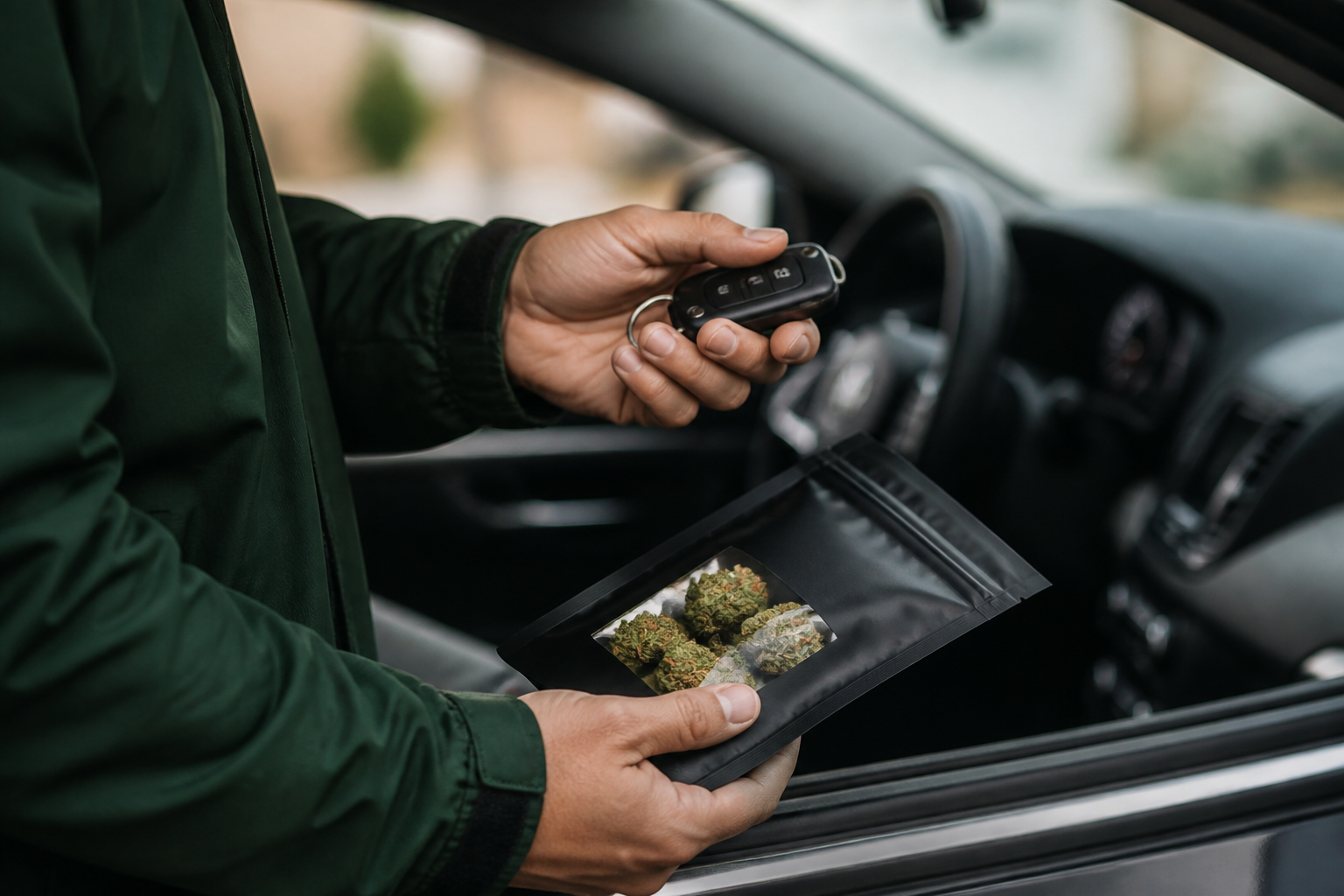
- ID Verification: Scan the customer’s ID at the time of order *and* visually inspect it (and scan it again if your software supports it) at the door. The person who ordered must be the one to receive it. No exceptions.
- Purchase Limits: Your system must track and enforce OCM purchase limits to prevent customers from buying more than they’re legally allowed within a given timeframe.
- Delivery Window: Deliveries can only occur during your approved hours of operation.
- Receipts and Manifests: Each delivery must be accompanied by a specific receipt for the customer and a delivery manifest for your records, detailing the driver, vehicle, route, and contents of the order. Your software should generate these automatically.
- No Loitering: Drivers must complete the transaction promptly and cannot linger at the delivery location.
Marketing Your New Cannabis Delivery Service
Once you’re operational, you need to get the word out. Cannabis marketing has its own set of strict rules, but you still have plenty of effective, compliant options.
Start by optimizing your online presence. Ensure your dispensary is listed correctly on Google Maps, Weedmaps, and Leafly, with “delivery” clearly noted as a service you offer. Focus on local SEO to capture searches like “cannabis delivery near me” or “dispensary that delivers in [Your Town]”.
Build an email and SMS marketing list from your existing customers. These are your most valuable marketing assets, as they allow you to communicate directly with people who already know and trust your brand. Use these channels to announce your new delivery service, send out special offers, and keep your customers engaged. A great delivery experience—fast, friendly, and professional—is one of the best marketing tools you have.
Frequently Asked Questions
What are the specific vehicle requirements for cannabis delivery in NY?
Vehicles must be properly registered and insured. They cannot have any cannabis-related branding or advertising. Inside, the cannabis products must be stored in a secure, locked container that is not visible from the outside.
Can I use a third-party service like DoorDash for my cannabis delivery?
No. Mainstream delivery services like DoorDash and Uber Eats are not licensed or equipped for cannabis delivery. You must use either your own trained employees or a specialized third-party platform that is designed to comply with OCM regulations.
How much cannabis can I deliver to a single customer in NY?
The delivery limits are the same as the personal possession limits in New York. Currently, this is up to three ounces of cannabis flower and up to 24 grams of concentrated cannabis per person per day.
What records do I need to keep for each delivery?
You must maintain a detailed log for every delivery, including the order information, customer verification details, driver and vehicle info, the timeline of the delivery route, and confirmation of receipt. Good delivery software automates this record-keeping.