
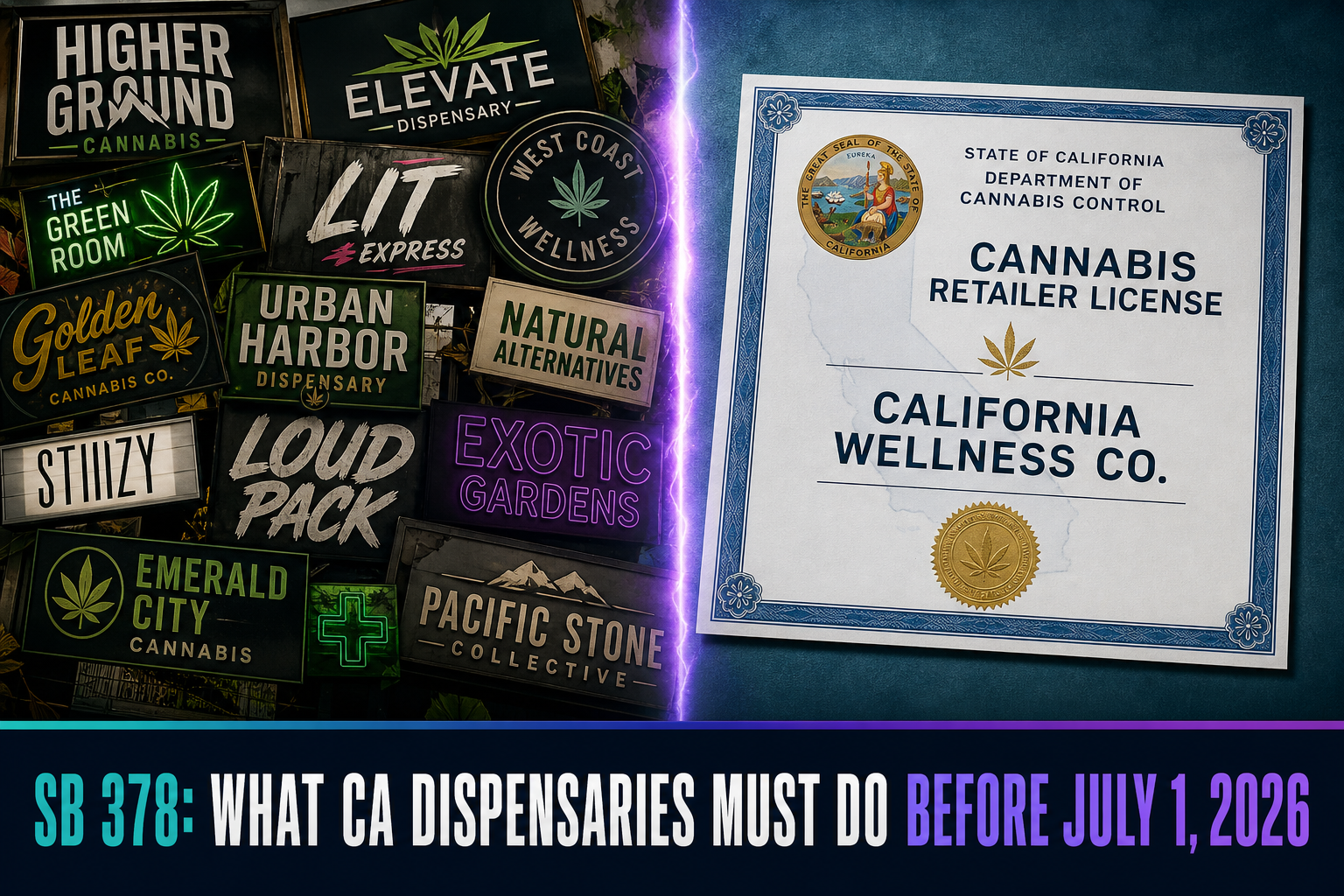
Is your dispensary’s branding a little… creative? Do you use a catchy name on Weedmaps or Leafly that’s different from your legal business name? If so, the clock is ticking. A new California law, SB 378, is about to clean up the wild west of online cannabis advertising, and you have until July 1, 2026, to get your house in order.
This isn’t just another piece of bureaucratic red tape. SB 378 is a seismic shift that will fundamentally change how licensed cannabis operators can market themselves on major third-party platforms. It’s designed to squeeze out unlicensed competitors and bring much-needed transparency to the consumer experience. For compliant dispensaries, this is a huge opportunity. But if you’re not prepared, your visibility—and your revenue—could take a major hit.
What Exactly Is California SB 378?
Think of SB 378 as a truth-in-advertising law for the cannabis industry. Signed into law to protect consumers and level the playing field for licensed businesses, this bill amends the Medicinal and Adult-Use Cannabis Regulation and Safety Act (MAUCRSA). Its primary goal is to stamp out the pervasive issue of unlicensed dispensaries advertising alongside legal ones.
The core of the law is simple: it prohibits any person or company from advertising cannabis or cannabis products from an unlicensed source. More importantly for you, it puts the onus on advertising platforms—the Weedmaps, Leaflys, and Yelps of the world—to verify that their advertisers are, in fact, licensed by the Department of Cannabis Control (DCC).
How do they do that? By cross-referencing your listing information with the DCC’s official database. This means the name on your profile must be a direct match to what’s on your state-issued license. No more clever nicknames or location-based monikers unless they are a formally registered DBA (Doing Business As).
The DCC Name Match Mandate: Weedmaps & Leafly
For most dispensaries, Weedmaps and Leafly are the two most critical marketing channels. Under SB 378, they’ll become the primary enforcers of this new name-matching rule. They have a legal obligation to ensure their listings correspond to a valid DCC license, and the easiest way to do that is a simple string match.
This means if your DCC license is for “California Cannabis Collective, LLC” but your Weedmaps profile is “CCC Downtown LA,” you have a problem. By July 1, 2026, that listing will need to display as “California Cannabis Collective, LLC.” If you have a registered DBA like “CCC Downtown LA,” you can use that, but it must be officially listed on your DCC license record.
“The core of SB 378 is simple: it puts the onus on advertising platforms to verify that their advertisers are licensed by the DCC.”
This will be jarring for many shops that have built brand equity around a name that isn’t their legal one. It could impact your local SEO, brand recognition, and even the look of your storefront if your signage doesn’t match. The platforms will likely implement automated checks that could flag or even delist non-compliant profiles, leading to a sudden drop in visibility and sales.
Yelp, Google, and the Shifting Landscape
The impact of SB 378 extends beyond the big two cannabis platforms. Other sites that host dispensary information will also have to adapt, though their approaches may differ.
| Platform | SB 378 Impact | Required Action |
|---|---|---|
| Weedmaps | Strictly enforcing DCC name match (legal or DBA) | Update listing name to match DCC license exactly |
| Leafly | Strictly enforcing DCC name match (legal or DBA) | Update listing name to match DCC license exactly |
| Yelp | Removing most enhanced profile features (CTA buttons, photo slideshows, etc.). Will only offer license verification. | No immediate name change needed, but expect reduced functionality. |
| No immediate impact on Business Profiles, but policy changes are always possible. | Best practice is to align your GBP name with your DCC license anyway for consistency. |
Yelp has taken a more dramatic step. Instead of just enforcing a name change, they are reportedly gutting their “enhanced profile” and other paid features for cannabis businesses. Their new focus will be solely on displaying basic information and verifying your state license. While this simplifies compliance, it also removes a valuable tool for dispensaries to stand out from the competition on the platform.
Google Business Profile (formerly Google My Business) is the wild card. As a global platform with complex advertising rules, it doesn’t operate under the same model as a cannabis-specific directory. For now, it doesn’t appear that Google will be forced to make immediate changes. However, it’s foolish to assume nothing will change. Best practice is to get ahead of the curve and align your GBP name with your DCC license to create a consistent brand identity across all platforms.
Your SB 378 Compliance Checklist
Don’t wait until June 2026. Here is a practical, step-by-step guide to auditing your listings and ensuring you’re compliant and ready for the change.
- Find Your Official DCC Record: Go to the DCC License Search portal. Search for your license and identify your exact “Business Name” and any “DBA Name” listed. This is your source of truth.
- Audit Your Weedmaps & Leafly Listings: Open your Weedmaps and Leafly profiles. Does the name at the top of the page match your DCC legal or DBA name exactly? Punctuation, LLCs, and all. If not, log into your admin panel and start the process of updating it now.
- Check Yelp & Other Directories: Review your Yelp page, Google Business Profile, and any other local directories you’re listed on. While the legal mandate isn’t as direct, creating consistency is a powerful SEO and branding move. Align these with your DCC name.
- File a DBA (If Necessary): If you’re attached to a brand name that isn’t your legal entity name, contact a business lawyer or use a filing service to register a DBA with the California Secretary of State. Once it’s approved, submit an application to the DCC to have it added to your license. This process can take months, so start immediately.
- Update Website & Social Media: Ensure the dispensary name used on your own website (in the title tags, headers, and footer) and your social media profiles matches your official name. Consistency is key.
Why SB 378 Is a Win for Licensed Operators
While this might feel like another compliance headache, it’s actually a significant victory for every licensed cannabis operator. For years, you’ve played by the rules—paying taxes, testing products, and maintaining a secure facility—while watching unlicensed “ghost” dispensaries pop up on delivery maps, stealing your customers with illicit products and lower prices.
SB 378 effectively cuts them off at the knees. By forcing platforms to de-list unlicensed advertisers, the law will dramatically reduce the visibility of the illicit market. This means the customers searching on Weedmaps and Leafly will see a list of legitimate, compliant businesses. Your dispensary.
This will lead to:
- Increased Share of Voice: With fewer illegal competitors cluttering up search results, your listing will be seen more often.
- Higher Quality Customers: Consumers will have more confidence that they are purchasing safe, tested products from a state-licensed source.
- A Fairer Market: The law levels the playing field, ensuring that the businesses investing in compliance are the ones who are rewarded with customer traffic.
This is a chance to clean up your digital footprint, solidify your brand identity, and capture market share from the unlicensed players who are finally being pushed out of the spotlight.
Frequently Asked Questions
What is the exact deadline for compliance with SB 378?
The law takes full effect on July 1, 2026. You should aim to have all your listings updated well before that date to avoid any service interruptions.
My Weedmaps name includes my city, like “Sparks Cannabis SF.” Is that okay?
Only if “Sparks Cannabis SF” is either the legal name on your DCC license or a DBA that has been officially registered with the state and added to your DCC license. If not, it will need to be changed to match your legal name.
What happens if I don’t update my name by the deadline?
The advertising platforms (Weedmaps, Leafly, etc.) will be legally required to remove your listing. This would make your dispensary invisible to the thousands of customers who use these apps, leading to an immediate loss of traffic and revenue.
Will this affect my dispensary’s SEO?
It could, both positively and negatively. Changing a long-standing business name might cause a temporary dip in recognition. However, having a consistent, verified name across all platforms is a strong long-term SEO signal that builds trust and authority with search engines like Google.